By Savera Mathal
Gilgit-Baltistan is a region where nature reveals itself in all its splendour. However, over the past few years, the region has increasingly come under the impact of severe natural disasters due to climate change. Heavy rainfall, the rapid melting of glaciers, sudden flash floods, landslides, and rising river levels are no longer extraordinary events but are gradually becoming a part of the annual cycle. This situation has not only caused damage to human lives, homes, crops, and infrastructure but has also challenged the economic, social, and administrative foundations of the entire region.
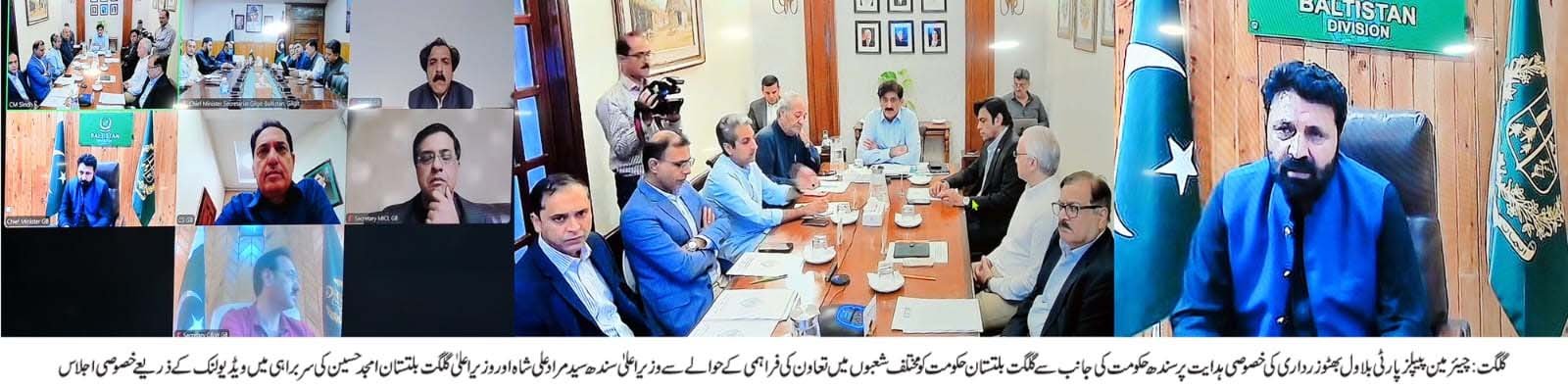
Following the recent heavy rains and flood situation, the directives issued during the high-level meeting chaired by Chief Minister Gilgit-Baltistan Amjad Hussain reflect that the government has taken the current emergency seriously. The decisions regarding rescue, relief and rehabilitation measures, the immediate restoration of roads, access to affected areas, the supply of food and essential commodities, the restoration of electricity, water and irrigation systems, the availability of heavy machinery, and keeping all relevant departments fully mobilised are undoubtedly both an immediate necessity and a public expectation. The question is not simply what announcements the government has made, but whether, despite facing the same problems every year, there has been any fundamental improvement in our preparedness. Are we still confined to emergency meetings, temporary measures, and immediate directives after every disaster, or have we also undertaken long-term planning for the future?
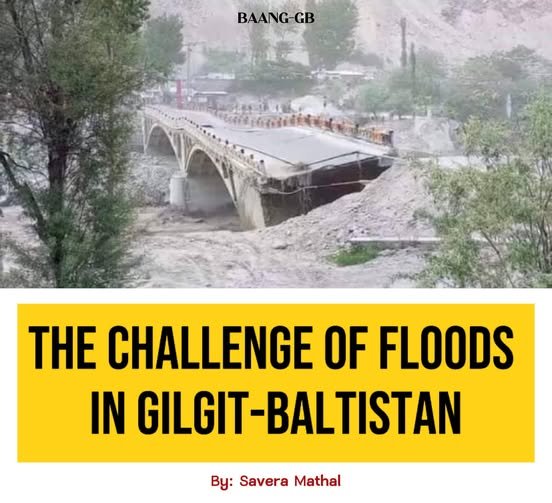
It is a fact that the geography of Gilgit-Baltistan is extremely challenging. Most districts rely on only one or two highways for land connectivity. Whenever a bridge collapses or a landslide occurs, an entire district or valley becomes cut off from the outside world. The same situation emerged this time, as communication with several areas was disrupted, highways were blocked, and people were forced to endure severe hardships.
The Chief Minister’s directive to launch helicopter services for remote areas is a positive decision because, under such circumstances, air access often becomes the only means of saving lives. However, an important question also remains: should there not already have been a permanent air emergency plan in place for a region as sensitive as Gilgit-Baltistan? Must a separate decision for helicopter deployment be made every single time?
Similarly, the directives for the restoration of the Jaglot-Skardu Road and the installation of a Bailey bridge are immediate necessities. However, the reality is that dozens of bridges and highways in Gilgit-Baltistan are damaged by natural disasters every year. Unless infrastructure is constructed according to modern standards that take climate change into account, a permanent solution will not emerge despite the expenditure of billions of rupees every year.
Across the world, roads, bridges, and protective embankments are now being constructed while taking future climate risks into consideration. Unfortunately, many projects in our country are still designed on the basis of historical weather data, even though weather patterns have changed rapidly.
During the meeting, the Chief Minister directed that GBDMA warehouses should remain fully stocked, the availability of wheat should be ensured, and expressed serious displeasure over delays in the procurement of heavy machinery. These directives also indicate that certain institutional weaknesses already existed. Had the procurement of heavy machinery been completed on time, many highways and link roads might have been restored much sooner.
The most important principle of disaster management is that preparedness should be completed before a disaster strikes, not during one. Rescue equipment, machinery, medicines, food supplies, fuel, temporary bridges, communication equipment, and trained personnel should already be available in every district so that an immediate response is possible during any emergency.
There are many villages in Gilgit-Baltistan where the closure of a single bridge or road leaves thousands of people stranded. For such areas, alternative routes, temporary bridges, and emergency plans must be prepared in advance.
The Chief Minister has directed all Commissioners and Deputy Commissioners to hold emergency meetings on a daily basis and ensure the restoration of water supply, electricity, irrigation systems, and other basic services. From an administrative perspective, this is an essential step because district administrations play the most effective role during natural disasters.
However, administrative success cannot be achieved through directives alone. It equally depends on resources, training, authority, and accountability. If district officials do not have the required machinery, budget, workforce, and authority to make immediate decisions, even the best directives cannot produce the desired results.
After floods, the greatest challenge is not merely the restoration of roads but the restoration of the lives of affected families. Thousands of people lose their homes, livestock, crops, orchards, and livelihoods. In such circumstances, providing food alone is not sufficient. The complete rehabilitation of affected families, financial assistance, agricultural recovery, alternative livelihoods, and psychological support also become the responsibility of the state.
Unfortunately, in our country, the rehabilitation phase often slows down after the initial relief efforts, forcing affected families to continue living with hardships for years.
The economy of Gilgit-Baltistan depends largely on agriculture, horticulture, tourism, and small businesses. When roads are blocked, not only is the local population affected, but tourism also comes to a halt. Fruits and vegetables cannot reach markets, the transportation of fuel and food is disrupted, and the entire economic system comes under pressure.
For this reason, the restoration of roads should not be viewed merely as a transportation facility but as an essential part of economic recovery.
The directive issued during the meeting to ensure the presence of engineers and relevant staff at powerhouses, along with action against absenteeism, is also an important measure.
Electricity is already a major issue in Gilgit-Baltistan, and if powerhouses are affected during flood situations, the public is forced to endure even greater hardships. However, this issue also requires a permanent solution. Several powerhouses are located in areas that face the threat of floods or debris flows every year. In the future, it will be essential to select safer locations for new installations and adopt protective walls and modern engineering designs.
It is also a reality that the greatest impact of climate change is being felt in regions that have contributed very little to global warming. Gilgit-Baltistan is one of those regions. The rapid melting of glaciers, glacial lake outburst floods, unprecedented rainfall, and extreme temperatures could create even greater risks in the future. In this context, emergency response alone is not enough. There is a need for a comprehensive climate adaptation policy that integrates infrastructure, water resources, urban planning, forests, natural streams, emergency systems, and the participation of local communities.
Local communities also play an extremely important role during natural disasters. In many remote areas, local youth, volunteers, and social organizations are the first to carry out rescue operations and provide initial relief before government assistance arrives. Therefore, the government should establish Community Emergency Response Teams at the union council and village levels, provide them with training and essential equipment, and promote emergency preparedness at the local level.
At the same time, there is a need to make full use of modern technology. Satellite monitoring, weather forecasting, early warning systems, drone surveillance, GIS mapping, and digital emergency communication can prove highly effective in responding to future natural hazards.
Transparency is equally important in disaster management. The public has the right to know where relief supplies have been delivered, how many resources have been used in each district, how many families have been affected, how much financial assistance has been provided, and what stage rehabilitation projects have reached. The timely dissemination of information not only builds public confidence but also helps prevent rumours and misinformation.
At present, the need is not merely to reopen roads or rebuild bridges but to establish a resilient system that can also protect future generations. If the same losses are suffered every year and the same emergency measures have to be repeated each time, it indicates that there is a deficiency in long-term planning.
The Chief Minister’s directives to mobilise the relevant departments, accelerate the procurement of machinery, keep warehouses fully stocked, ensure the presence of district administrations in the field, cancel the leave of emergency personnel, and expedite the rehabilitation of affected areas reflect a responsible government response. The real test now lies in the timely and effective implementation of these decisions.
The people of Gilgit-Baltistan need more than temporary relief; they need lasting protection. They need bridges that can withstand every flood, highways that are not blocked by minor landslides, a disaster management system that is prepared before disasters strike, and planning that builds for the future while taking the risks of a changing climate into account.
Natural disasters cannot be prevented, but the damage they cause can certainly be reduced through effective planning, modern infrastructure, strong institutions, timely decision-making, and collective national commitment. If the current crisis is treated as a lesson and becomes the foundation for lasting reforms, this difficult period could mark the beginning of a safer, better organised, and more sustainable future for Gilgit-Baltistan.