By DJ MATHAL
Gilgit Baltistan is far more than a breath taking tourist destination. It is Pakistan’s most environmentally sensitive region and the source of the country’s major river systems, making it central to national water security, agriculture, biodiversity, and economic stability. Every climatic change that occurs in this mountainous region has consequences far beyond its borders, affecting millions of people across Pakistan. In recent years, the increasing frequency and intensity of climate related disasters have made one reality unmistakably clear: waiting for disasters to strike is no longer an option. Preparedness, resilience, and long term planning must become the foundation of public policy.
This growing sense of urgency was reflected in the recent meeting between Gilgit Baltistan Chief Minister Amjad Hussain Advocate and Chairman of the National Disaster Management Authority (NDMA), Lieutenant General Inam Haider Malik. Their detailed discussions on disaster preparedness, glacier protection, and climate resilience signaled an important shift from reactive emergency response toward proactive risk management. If the proposals discussed during the meeting are implemented effectively, they could significantly reduce future human and economic losses across the region.
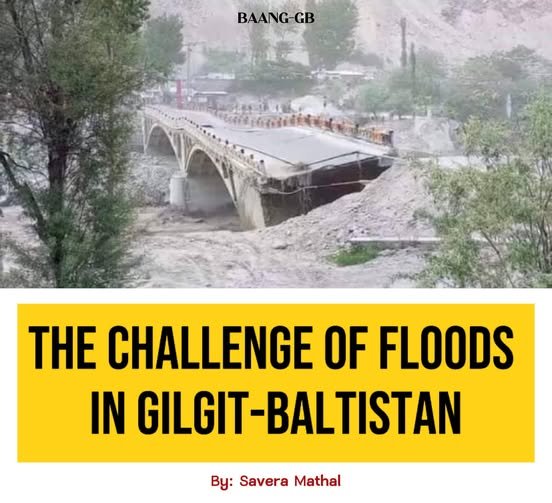
Climate change is widely recognized as one of the defining challenges of the twenty first century, but its consequences are especially severe in glacier dependent regions. Gilgit Baltistan is home to some of the largest concentrations of glaciers outside the polar regions. Even modest increases in temperature disturb the delicate balance of these ice reserves, accelerating glacier melt and increasing the formation of glacial lakes. As a result, glacial lake outburst floods (GLOFs), cloudbursts, landslides, and flash floods have become increasingly common. Every summer, villages, roads, bridges, farmland, and critical infrastructure face heightened risks, threatening both livelihoods and lives.
The region’s approximately 700 glaciers are not merely local natural assets. They are vital to Pakistan’s long term water security. Any continued disruption to these frozen reservoirs will have profound consequences for downstream agriculture, hydropower generation, and freshwater availability for future generations. Protecting these glaciers must therefore become a national priority rather than being viewed solely as a regional environmental concern.
Among the most significant proposals discussed by the provincial government is the establishment of a Glacier Protection Authority. Such an institution could play a transformative role in glacier monitoring, scientific research, environmental data collection, and evidence based policymaking. However, its success will depend on more than its formal creation. It must be equipped with modern scientific technology, trained professionals, sufficient funding, and legal authority. Countries with major glacier systems have demonstrated that specialized institutions can greatly improve climate adaptation and risk reduction, and Pakistan has an opportunity to build upon those successful international models.
Another critical component of climate resilience is the effectiveness of early warning systems. Modern technology has made it possible to detect and predict many natural hazards before they occur. Yet technology alone is insufficient. Warning systems require regular maintenance, uninterrupted communication networks, reliable power supplies, and well trained personnel capable of interpreting data and responding rapidly. Without these supporting elements, even the most advanced equipment can fail when it is needed most. The Chief Minister’s emphasis on maintaining and upgrading existing early warning systems therefore represents a practical and necessary step toward safeguarding vulnerable communities.
Disaster resilience cannot rely solely on government institutions. Around the world, community based disaster risk management has proven to be one of the most effective strategies for reducing casualties. Local communities should receive training in first aid, evacuation procedures, search and rescue, emergency communication, and the operation of warning systems. In mountainous regions such as Gilgit Baltistan, where emergency responders may require hours to reach remote settlements, trained local volunteers can often make the difference between life and death.
Equally important is the role of higher education and scientific research. The Chief Minister’s proposal to introduce specialized academic programs on glaciers and climate science in the universities of Gilgit Baltistan reflects long term strategic thinking. Despite being among the countries most vulnerable to climate change, Pakistan still has limited domestic research capacity in glaciology, climate science, hydrology, and disaster management. Given its unique geography, Gilgit Baltistan itself serves as a natural laboratory for climate research. Strengthening local academic institutions could help produce a new generation of scientists capable of contributing to national policymaking and international climate research.
Research should not remain confined to academic publications. Universities must establish close partnerships with the Pakistan Meteorological Department, the NDMA, provincial disaster management authorities, irrigation and forest departments, and international research organizations. Such collaboration would ensure that scientific findings directly inform policy decisions and disaster preparedness strategies.
Seasonal flooding continues to expose weaknesses in infrastructure management. Every year before the monsoon season, blocked drainage channels, illegal encroachments, accumulated debris, and inadequate drainage systems increase flood risks. The provincial government’s proposal to formulate a comprehensive policy for the regular maintenance of flood channels is therefore both timely and necessary. However, maintenance should not be treated as an emergency measure carried out only before expected rainfall. Instead, it should become a continuous, year round program supported by dedicated funding, institutional accountability, and regular monitoring.
The resilience of transportation infrastructure is equally essential. The Karakoram Highway and other major roads serve as lifelines for tourism, trade, healthcare, education, and national security. Prolonged road closures during floods and landslides isolate communities, disrupt supply chains, and inflict heavy economic losses. Calls to strengthen the National Highway Authority’s emergency response capacity and ensure round the clock availability of machinery are therefore critical for maintaining connectivity during natural disasters.
Effective disaster response also depends upon strategic preparedness. The proposal to establish a regional emergency warehouse in Skardu deserves serious consideration. Pre positioning relief supplies including food, medicine, tents, rescue equipment, and machinery would significantly improve emergency response times. Similar logistical centers should gradually be established in Gilgit, Diamer, Ghizer, Astore, Ghanche, and other disaster prone districts to ensure equitable regional coverage.
Strengthening Rescue 1122 remains another pressing priority. Mountain rescue operations require specialized equipment, advanced communication systems, drones, satellite monitoring, helicopter support, and highly trained personnel. The NDMA’s commitment to enhancing training and technical resources is encouraging, but translating these commitments into operational capacity will ultimately determine their effectiveness during emergencies.
The Chief Minister also expressed concern regarding delays in projects overseen by the Federal Flood Commission. Such delays often leave vulnerable communities exposed to avoidable risks. Addressing this issue requires stronger coordination between federal and provincial institutions, transparent monitoring mechanisms, and timely implementation of flood mitigation projects.
Pakistan contributes only a small fraction of global greenhouse gas emissions, yet it remains among the countries most severely affected by climate change. This imbalance strengthens the case for expanding access to international climate finance, including the Green Climate Fund and other global adaptation initiatives. Gilgit Baltistan’s unique environmental significance should be presented more effectively at international forums to attract technical assistance and financial support for climate resilience projects.
Ultimately, climate adaptation cannot be achieved by governments alone. Public awareness, educational institutions, responsible media, local governments, civil society organizations, and the private sector all have essential roles to play. Building a resilient society requires collective responsibility, where climate preparedness becomes part of everyday governance rather than an occasional response to disasters.
The glaciers, rivers, mountains, and valleys of Gilgit Baltistan are not only the pride of the region. They are part of Pakistan’s natural heritage and the foundation of its water future. If meaningful action is delayed, future generations may know these landscapes only through photographs and history books. The proposals emerging from the recent high level discussions must therefore move beyond announcements and be translated into measurable policies, clear timelines, institutional accountability, and sustained implementation.
The need of the hour is not temporary crisis management but a comprehensive national strategy that integrates climate resilience into development planning, education, scientific research, infrastructure, emergency management, and local governance. The future of Gilgit Baltistan, Pakistan’s water security, and the well being of millions of people will depend on our willingness to prepare for disasters before they occur. Only through foresight, coordinated planning, and collective responsibility can this extraordinary region remain resilient, sustainable, and secure for generations to come.